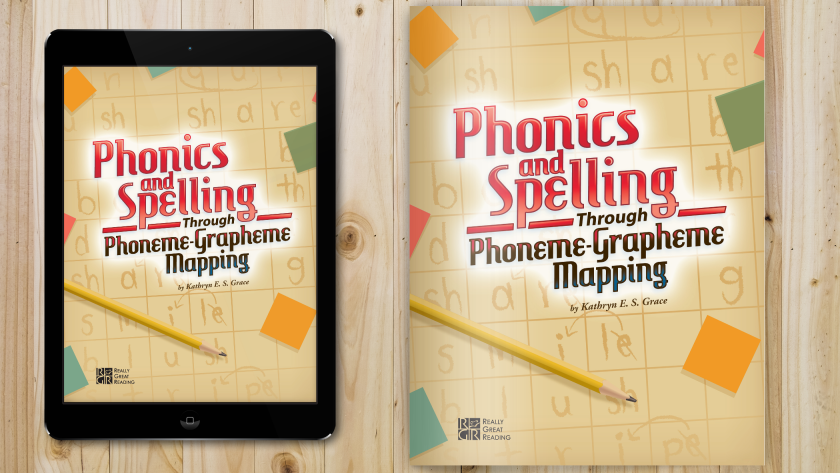
Kathi Grace’s curated series of articles on Phoneme-Grapheme Mapping, featured in The Reading League Vermont’s “Teaching Reading in Brief” Vol. 2, No. 1 – Understanding and Teaching Phoneme Grapheme MappingVol. 2, No. 2 – Mapping Syllable Types with Phoneme Grapheme MappingVol. 2 No. 3 – Four Principles of Grapheme UseVol. 2 No. 4 – The Importance…

1700s–Mid-1800s: Children are taught to read through memorization of the alphabet, practice with sound-letter correspondences, and spelling lists. The prevailing texts used for teaching reading are the Bible and political essays.
Mid-1800s: Inspired by Jeffersonian democratic ideals, some educators attack phonics and urge a meaning-based approach to learning to read.
Late 1800s: All-purpose reading materials are replaced by…
I created Phoneme-Grapheme Mapping in 1983 to help students (and teachers) understand the reality that the number of sounds (phonemes) they hear in a word may be different from the number of letters that represent those sounds. This procedure employs a variety of mapping methods to illustrate the complex, yet predictable, phoneme grapheme relationships in…